Showing posts with label Russia. Show all posts

Friday, July 20, 2018

America in the Claws of the Russian Bear: Clarity After Helsinki from Internationally Renowned Authority on Russian Foreign Policy, Dr. Stephen J. Blank


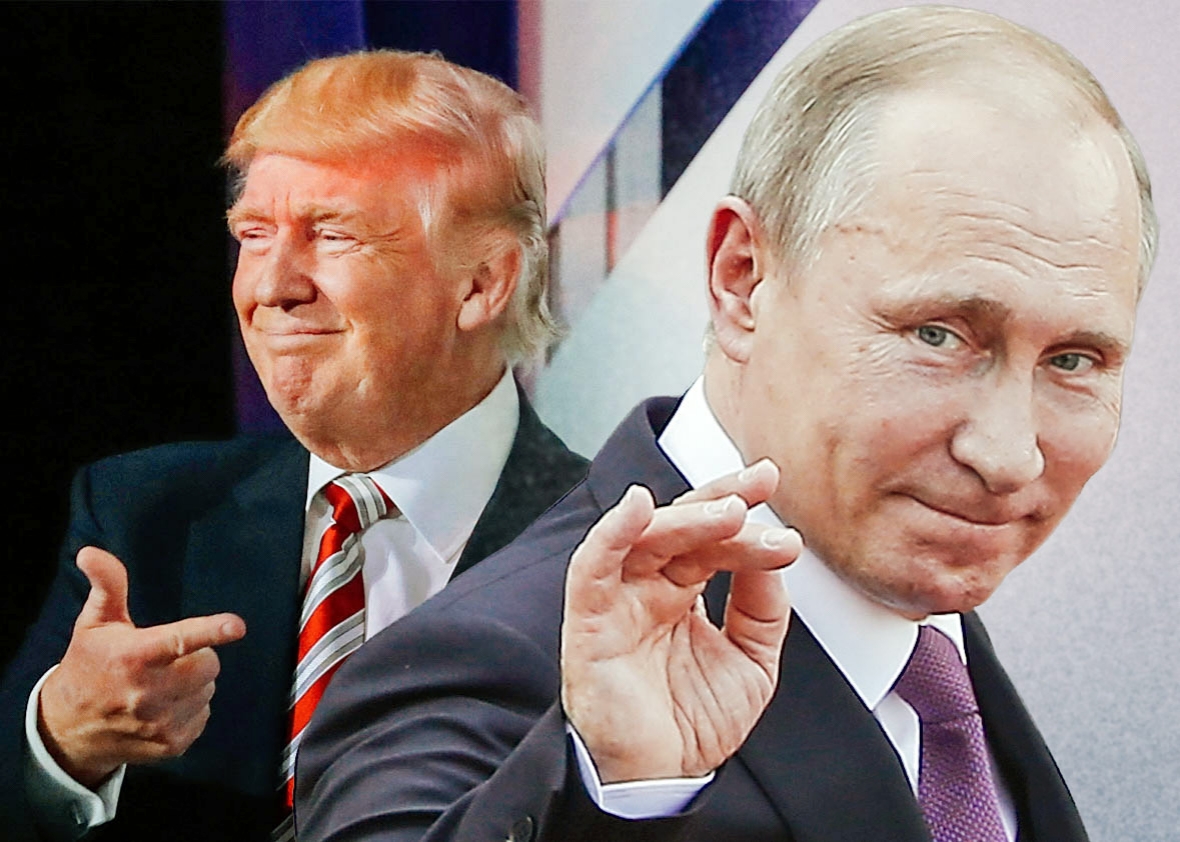
Photo Credit: Slate.com 

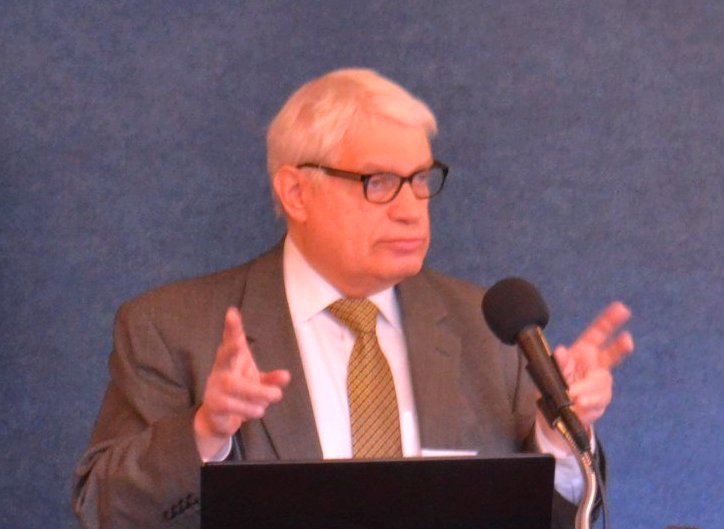
Last week in our pre-summit interview, the venerable Dr. Stephen J. Blank set realistic expectations for the issues to be raised by U.S. President Donald Trump and the responses and rhetoric likely to come from Russian President Vladimir Putin at their July 16, 2018 summit in Finland.  The themes explored in our interview presaged the hazards and disconnects that contributed to the catastrophe in Helsinki - and that is no surprise to those who follow Dr. Blank.  (https://securiitybriefs.blogspot.com/2018/07/calibrating-expectations-for-trump.html)  He is a University of Pennsylvania and University of Chicago-educated historian of the Russian tsarist, Soviet and post-communist eras and has a breadth and depth of insight that is second to none among the world's analysts of Russian foreign policy and the implications for U.S.-Russia relations and international security more broadly.  He served for twenty-plus years as a Professor of National Security Studies at the U.S. Army War College and today is Senior Fellow at the American Foreign Policy Council in Washington, D.C.  Having studied and travelled extensively across the former USSR and with a professional command of the Russian language, Stephen Blank is a meticulous analyst of Russian events, players and policies and his encyclopedic knowledge of things Russian and stellar assessments have him speaking to civilian and military audiences across the Americas, Europe, Asia and the Middle East.

I am honored to represent Steve Blank for speaking engagements and welcome him to my interview chair at historic moments like this - the debacle that was President Trump's performance in Helsinki and the conquest that was Vladimir Putin's.  I met with Steve again on Wednesday in his Washington, D.C. office under the weight of unprecedented disappointment in Monday's events.  As ever, he synthesized that which was brought to bear from the history, personalities and dynamics that got us to this somber point in U.S.- Russia relations.  One by one, or taken as a whole, the clips below escort us from the surreal that was Helsinki to the most practical security realities facing America today - and for the foreseeable future - in dealing with the bear that is Russia ruled by Vladimir Putin.


American Presidents come and go every four or eight years and Vladimir Putin seems to take advantage of this cycle and each President's palpable eagerness to improve U.S.-Russia relations.  What are likely to be Putin's next moves to project or expand Russian influence given his strategic objectives and his read and play of POTUS 45?


Last Friday the U.S. Department of Justice issued its indictment charging twelve Russians with a "sustained effort" to hack Democrats' emails and the Democratic National Committee's computers.  (https://www.justice.gov/file/1080281/download)  All twelve Russian nationals charged were members of the GRU - the Russian military intelligence service.  Why was the GRU deployed for this mission?


How likely is Vladimir Putin to take President Trump's whitewashing of Russian interference in the 2016 election as license to begin cyber-interference and even disruption of other U.S. systems and activities - say banking and financial services, media and/or communications? 

 
It's well documented that many who trespass against Vladimir Putin find themselves or their reputations assassinated.  As we Americans and our allies strain to understand President Trump's embrace of President Putin, is it out of the question that he [President Trump] and/or his beloved Czech-American and Slovenian-American children are under threat from the Kremlin?  


At Monday's press conference in Helsinki, Vladimir Putin reported that he spoke with President Trump about U.S. and Russian cooperation to combat the threat of "transnational crime."  With Russia so deeply involved in sex-trafficking across Eastern Europe, illegal drug and arms running in South America, identity theft and disinformation campaigns in North America and Europe, what is his motive for suggesting this?  It's as brazen and bizarre as his offer to co-investigate the hacking of the DNC - or is it? 


You've served for decades as a consultant to companies and governments on Russian and Eurasian energy matters.  Put Nord Stream 2 in perspective as a matter of international security. 


How is it that German Chancellor Angela Merkel is so comfortable with her country's reliance on Russian-supplied energy given her history with Vladimir Putin in particular and Russia and the former Soviet Union general?


What do individual and institutional investors need to keep in mind regarding Gazprom and other Russian energy companies? 


At the press conference following the private meeting on Monday between Presidents Trump and Putin there was mention of their discussions about banning weapons in space.  Beyond the Outer Space Treaty to which the United States, the Chinese and Russia (former USSR) are all signatories, what is Putin gaming for here besides the appearance of "great power status?" 
 

Realistically, where can U.S. - Russia relations go from here and how do we get there?


Notes: 
"Kompromat" is Russian for "compromising material"- that is information that could be used to damage the reputation of a public figure, create negative publicity for a politician or for blackmail of an individual.  Kopromat is held by Russian agents to ensure loyalty. 
 
Angela Merkel was born and lived in East Germany throughout and until the end of the Cold War and the reunification of East and West Germany in 1990.  Vladimir Putin served as an agent of the KGB in East Germany from 1985 until the fall of the Berlin Wall in 1989. 
 
 
Lisa Bernard is the President of SecuritySpeak, LLC, a consulting firm devoted to matters of international security.  Experts like Dr. Stephen J. Blank offer briefings, talks and distinguished lectures to audiences of all types working to bring analyses and understanding of security matters to people in all walks of life.  To secure Dr. Blank for your next program reach out to  (203) 293-4741 or LisaBernard@SecuritySpeak.net.   Learn more at  www.SecuritySpeak.net and follow us www.Facebook.com/PodiumTime.


Monday, June 25, 2018

Well Beyond the Red Line Crossed: Refugees, Reconstruction and Realpolitik in Syria Under Bashar al-Assad


This spring saw the beginning of the end of the Syrian Civil War that finds President Bashar al-Assad having prevailed both politically and militarily.  While the country remains a violent place, developments and numbers are noteworthy and critical in the consideration of U.S. security policy in its humanitarian, economic, military and diplomatic dimensions going forward in the region.  Among them, eleven million Syrians are displaced - both in and outside of their homeland whose infrastructure is demolished.  In control of more than sixty per cent of the country, President Assad has begun reconstruction and there are reports are that businesses are starting to open and contracts being negotiated by individuals, governments and companies.  Estimates of the cost of rebuilding Syria range from $200 billion to $1 trillion with most analysts and Bashar al-Assad himself agreeing on $400 billion price tag.  ISIS has been quashed.  Russian protection is cemented.  Iran has been told by Russia to withdraw its militias beginning with those near the border with Israel.

These circumstances prompted me to reach out to Ambassador Frederic C. Hof, appointed in 2012 as former Special Advisor for transition in Syria to Secretary of State Hilary Clinton after a year spent working to ease tensions between Syria and its neighbors in early 2011.  Ambassador Hof served in that position until September 2012 when he resigned in recognition that "the White House had little appetite for protecting [Syrian] civilians (beyond writing checks for refugee relief) and little interest in even devising a strategy to implement President Barak Obama's stated desire that Syrian President Bashar Assad step aside."  Ambassador Hof went outside the U.S. government and into the private sector as Senior Fellow at The Atlantic Council's Rafik Hariri Center for the Middle East, a program he would later direct for six years, in order to promote a more effective U.S. policy towards the Syria he described as "plunging into an uncharted abyss - a humanitarian abomination of the first order."  I met with Fred Hof in New York City on Tuesday, June 12th at the Bard College Globalization and International Affairs Program where he is teaching a seminar, Ten Principles for Effective Diplomacy.  With a view towards the stabilization of Syria and the strategic interests of the United States, I asked him what he thought the U.S. can and ought to be doing at this critical juncture.  His response:


My follow up question concerned the hurdles, obstacles and practical considerations of investing in the reconstruction of Syria and the possibility that China is in a better position than Russia, Lebanon, Jordan and other state contenders for long term investment.  Ambassador Hof replied:

 
Ambassador Fred Hof's professional life has focused largely on the Middle East with a long history of service and study in Jordan, Israel, Lebanon and Syria.  He is known internationally for his expertise in Arab affairs and for his integrity, bravery and intellectual honesty in diplomacy, negotiations and reporting.  I am grateful for his time and insights and shall be posting more of our interview, The New Middle East, in upcoming weeks.  
 
Lisa Bernard is the President of SecuritySpeak, LLC, a consulting firm and speakers bureau devoted to matters of national, cyber and international security.  Experts in these areas offer reports, briefings, talks and distinguished lectures to audiences of all types working to bring understanding of security matters to people in all walks of life.  To host Ambassador Hof for a speech, call (203) 293-4741 or email LisaBernard@SecuritySpeak.net.  See more of their work at  www.SecuritySpeak.net and at  www.Facebook.com/PodiumTime.   


Thursday, May 10, 2018

Understanding the Solid Relationship Between Israel and Russia

 
Photo Credit: The Times of Israel

This week marks the 73rd anniversary of the defeat of German Nazism and Israeli Prime Minister Benjamin Netanyahu was in Moscow with Russian President Vladimir Putin to mark the occasion.  Their diplomatic relationship - and the larger dynamic of Israel-Russia relations - are curious to so many Americans given the Russian patronage of Iran and the enmity between Israel and Iran.  For some perspective, I put the question to Dr. Stephen J. Blank, Senior Fellow at the American Foreign Policy Council in Washington D.C.  Dr. Blank is a historian of Russian foreign and military policies and his expertise spans the tsarist, Soviet and post-communist periods.  Ever generous with his time and expertise, he shared seven key reasons for what he called "the solidity of this relationship."

 
  • First, Putin personally appears to have good feelings about Israel and Jews and Russian policy formally eschews anti-Semitism - though there is still a fair amount of  it in society and he is willing to use it in measured doses for his domestic needs. 

  • Second,  Russian elite respect Israel's military-economic-technological prowess and know that Israel is a channel to Washington. 

  • Third, there are thriving trade and investment relations between the two countries - even to the point where Israel has sold weapons to Russia. 

  • Fourth, Israel respects Russian red lines and avoids actions that are provocative to her. If Israel has to cross a line it informs Moscow first.  This is something Putin et al. appreciate because it shows Israeli respect for Russian sensitivities and interests. 

  • Fifth, Moscow knows that wars against Israel end badly for Arabs and bring the U.S. back into the Middle East in a big way. 

  • Sixth,  there is some belief that the Russian Aliyah - the group of Russian Jews who have settled in and become citizens of Israel - is in some sense "our people" and they wish to preserve that tie.  They also understand what the USSR lost by pursuing anti-Semitic policies. 

  • Seventh, it is critical to Moscow's Middle East policies and its sense of those policies that it be able to talk candidly to all parties and not be excessively identified with any one state's interests.  This also includes Israel precisely because of the many unsettled security issues in the region."

In hearing Dr. Blank's incisive comments I am reminded of the salient and sage words of another distinguished alumnus of University of Pennsylvania, Charles Dudley Warner, who observed that "[p]olitics makes strange bedfellows." 

Lisa Bernard is the President of SecuritySpeak, LLC, a consulting firm devoted to matters of international security.  Experts like Dr. Stephen J. Blank offer briefings, talks and distinguished lectures to audiences of all types working to bring analyses and understanding of security matters to people in all walks of life.  To secure a speaker for your program reach out to  (203) 293-4741 or LisaBernard@SecuritySpeak.net.   Learn more at  www.SecuritySpeak.net. 


Saturday, April 14, 2018

Chemical Weapons in Syria: The North Korean Connection


This morning I was on my way to interview Gordon G. Chang on the upcoming Trump-Kim Summit when I heard the Pentagon briefing and commentaries on the strikes on Syrian chemical weapons arsenals.  Chief Spokeswoman Dana White emphasized that this operation was different from the 2017 strike on Syria's Shayrat Air Base in that it targeted Bashar al-Assad's production capability rather than his delivery vehicles.  General McKenzie detailed the contributions of British and French forces and noted that Russian air defenses were not deployed.  The European Union called on Russia and Iran to help stop future chemical weapons attacks by the Syrian government.  What I did not hear or read in any of the reports or analyses is the role of North Korea in the Syrian chemical weapons program.  Gordon Chang is the author of Nuclear Showdown: North Korea Takes on the World and a leading authority on North Korean, Chinese and regional military and security affairs.  On the eve of the 2016 Presidential election I heard him deliver a briefing entitled, The New Nuclear Nexus: China, Iran and North Korea. In it, he revealed the eye-opening extent of North Korea's strategic relationships with other autocratic regimes.  I jumped at the chance to ask him about the relationship between North Korea and Syria with respect to chemical weapons.  His response:


My full interview with Gordon Chang will be posted in advance of the Trump-Kim Summit.  In the interim, I urge you to follow him @GordonGChang and read his articles at www.TheDailyBeast.com.  See him live if you can or hear him on radio on The John Batchelor Show on 770 AM in the NY area.  His talks, commentary and analyses are always timely and cutting edge. 
 
 
Lisa Bernard is the President of SecuritySpeak, LLC, a consulting firm and speakers bureau devoted to matters of national, cyber and international security.  Experts in these areas offer reports, briefings, talks and distinguished lectures to audiences of all types working to bring understanding of security matters to people in all walks of life.  To host a speaker or arrange for a consultation call (203) 293-4741 or email LisaBernard@SecuritySpeak.net.  See more of their work at  www.SecuritySpeak.net and at  www.Facebook.com/PodiumTime.  Very special thanks go to Lydia and Gordon Chang for their ever-gracious efforts to keep the level of discourse on these critical issues at a high and dignified plane and to the Charles Dillon Public Library for providing the venue for Lisa Bernard's interview of Gordon Chang. 


Friday, February 16, 2018

James Olson DECLASSIFIED: 90 Minutes with a Legend in CIA Clandestine Services


Last night in Waterbury, Connecticut, 350 seats filled with first responders, law enforcement and security professionals, FBI agents, members of the armed services, concerned citizens, educators, professors and students of government, political science, criminal justice and homeland security all gathered to hear James Olson, a "legend in clandestine services" as described by Robert Gates, former Director of Central Intelligence.  Mr. Olson, former Chief of Counterintelligence at the United States CIA, delivered Intelligence and the Terrorist Threat: How Far Have We Come Since 9/11? 

In a clever, three-part presentation, this spymaster turned master raconteur took his audience to a standing ovation with richly detailed and revealing "off-the-record" remarks, a robust Q&A session and a surprise third component of his time on stage that brought the house down.  With great podium presence, James Olson surveyed the nature of the terrorist threat to the United States from abroad and within.  With humility, his boyish charm and tremendous sense of humor, he made clear by examples the obscured yet pivotal contribution of intelligence gathering by clandestine agents.  He unveiled the exacting and multi-faceted training undergone by operatives of the CIA that prepares them in unimaginable ways for this unique path of public service that is anything but public.  Their careers  are hidden, inherently dangerous and typically unheralded. 

Impressive was how well James Olson knew his audience and seems to understand people in general.  His talk was chock-full of vivid anecdotes not only from his time in the field, but also from his own ongoing career and the unique challenges of marriage and parenting while stationed abroad for years under deep cover in service to our national security.  Heads were nodding and shaking in the audience throughout his formal talk.  His warmth and focus in informal chats before and following his podium time were meaningful to students, practitioners, faculty and a few fellow Cold Warriors who were delighted to reconnect.  I can see why James Olson is today a beloved lecturer on the art of espionage at Texas A&M University's Bush School of Government & Public Service.  He has my endorsement as one to invite to your firm, school or organization's next distinguished speaker series.

Thanks go to Post University whose student, Ben McKenna, took the lead with support from President Donald Mroz and Professor David Jannetty in hosting James Olson and securing the co-sponsorship of Brass Axe Capital, Crystal Rock, Holy Cross High School, Securitas, Powers Brennan Griffin, Triple Stitch, Post University Student Life and the Waterbury Police, Fire Department and PAL. 

Lisa Bernard is the President of SecuritySpeak, LLC, a consulting firm devoted to matters of security and crisis management. Experts in these areas offer briefings, talks and distinguished lectures to audiences of all types working to bring analyses and understanding of security matters to people in all walks of life. (203) 293-4741. www.SecuritySpeak.net. 

Sunday, June 11, 2017

Talia Carner's HOTEL MOSCOW Earns its Place on the Permanent Bookshelf


ISBN 978-0-06-238859-9 from Harper Collins, New York, New York, 2015.  Available on Amazon, Barnes&Noble, Shop Indie Bookstores, and iTunes.

Authenticity and accuracy mark this work of historical fiction literally from chapter one.  As the protagonist, Brooke Fielding, arrives at Sheremetyevo  International Airport just north of Moscow, Russia in 1993, she confronts what many Jewish-Americans - and especially female Jewish-Americans - who have been through the security check recognize as "customs" lingering from the Soviet era.  "Speshiy iy zhdiy."  "Hurry up and wait." And while you're waiting, endure a hint of anti-Semitism, a measure of curiosity, a dash of chauvinism and a dose of intimidation.  That's just the beginning of this page-turner in which Talia Carner's gutsy and proactive heroine arrives as a citizen-diplomat to teach business skills to Russian women, turns accidental sleuth, and leaves fleeing for her life.  This 38 year-old, savvy New York executive lives a lifetime in a week's time as she is sucked into the maelstrom that Moscow became in October 1993 when, under Boris Yeltsin, the social order collapsed, a political revolt turned military, and economic dislocation pulverized any remaining sense of safety or security for Russian citizens.  Particularly vulnerable were Russian women - Brooke's charges, two of whom she finds herself befriending and defending against the misogyny of the culture and the excesses of a city gone lawless.  And in doing so, she finds herself learning what it means to be secure in one's identity while vulnerable in one's country of birth. 

Brooke winds up on the receiving end of a gut-wrenching education in the realities of domestic, professional and national life for Russian women.  No privacy at home.  Few to no amenities like bathing, restroom and laundry facilities and even scanter kitchen appliances, foodstuffs or cookware.  Antiquated sex education.  Severely limited access to routine healthcare and emergency medical attention.  And all these anvils on the shoulders of Russian women exacerbated by the scourge of alcoholism among Russian men that brought violence and sexual assault to women in their own homes just as the rise of mafia-like crime families brought plundering, murder and rape to their newly privatized factories and workplaces.  In the transition from the Soviet period was the utter absence of anything related to sustenance that women in modern times and first world countries might build on as foundations for their stability. 

If there was one sanctuary for Russian women, it was friendship, and Talia Carner's heroine embraces it.  Here too, the authenticity of this novel and setting are spot-on.  "Druzhba," as the Russians say, is the distinctly Russian brand of camaraderie and loyalty that binds as tight as DNA and runs deeper than compatibility or confluence of interests.  It's primal.  And it was as necessary as oxygen for survival in Moscow at that time.  It is through Brooke's friendships that we readers get a visceral sense of the resourcefulness, resilience and capacity for growth of Russian women in circumstances and conditions most Americans in 1993 wouldn't imagine let alone experience.  It is through the "druzhba" Brooke develops with two women, Svetlana and Olga, that her Jewish identity and Holocaust legacy are nuanced and ultimately defined.  And while the subject matter is disturbing, Talia Carner's elegant prose ushers us gracefully and tenderly through the most intimate thoughts and spaces these women occupy.  We are with this troika through their journey in and out of the euphoria that was the end of communism, the injustice of phantom anti-Semitism and the hazards of one-size-fits-all feminism. 

A "hotel" is a place of temporary lodging while on an expedition and HOTEL MOSCOW is aptly entitled.  For a time, Brooke Fielding and her Russian compatriots experienced the city of Moscow in which, arguably, all things magnificently and distinctly Russian are contained and most pronounced - like the set of matryoshka nesting dolls Olga presents to Brooke.  "'I want you to have this, another heirloom.  We are all products of our mothers, and carry their joys and sorrows inside us.'"  The women depart their journey forever connected and each wiser and more worldly for one another's legacies.  As Brooke says to Olga, "'I cherish that matryoshka you gave me.  It reminds me of you.  Strong, nurturing, traditional.  Women as the keepers of old values.'  With mist in her eyes, she added, 'Feminine.'"

Whatever your approach to matters of faith and feminism, pasts and futures, friendship and family, security and identity, HOTEL MOSCOW is jewel whose facets will throw light on your most personal reflections.


Tuesday, July 26, 2016

Russian Foreign Policy Turns on a DIME (Diplomacy, Information, Military, Economics): An Interview with Dr. Stephen J. Blank


The weather was just the first treat on July 19th when I arrived in Washington, D.C., at the Capitol Hill Club on that cool, dry and sunny morning to hear Dr. Stephen J. Blank deliver an address, Russia’s Global Probes. Like a luxury cruise ship, Dr. Blank navigated his remarks with expert engineering, using sophisticated instruments that work below deck to produce a smooth sail and memorable journey. His talk docked in three parts of the globe – Latin America, the Middle East and Europe. In each port of Russian activity, he delivered his audience reality-checks on Russian history in the region, Vladimir Putin’s objectives, Russia’s intrinsic nature, and the problems for U.S. national security with projecting American values into the interpretation of Russia’s undertakings. With the temporal breadth of a skilled historian of Russian, Soviet and post-Soviet affairs, Dr. Blank portrayed a crisp yet comprehensive snapshot of the world today through the Russian lens. He deftly decoded Russian behavior and Vladimir Putin’s positions, leaving his listeners sobered and empowered with a ready frame of reference for understanding and interpreting Russian diplomatic, information, military and economic operations. 

 
Dr. Blank and I then returned to his office at the American Foreign Policy Council for an interview. His generosity continued. A former professor of Russian National Security Studies and U.S. National Security Affairs at the Strategic Studies Institute of the US Army War College, he rolled up his sleeves and got to work informally as if my viewers were students there with him in his private office hours. Here are excerpts.
 
BERNARD:  I heard U.S. Secretary of State John Kerry assert that "nowhere is there a greater hotbed or incubator for these terrorists than in Syria," as he wrapped up meetings in Moscow with Russian President Putin and Foreign Minister Lavrov exploring U.S.-Russian cooperation to end the five-year civil war there. Reports are conflicting about the outcome of their talks and the possibility at all for military cooperation and intelligence-sharing. As an old Cold Warrior, it's not my first instinct to imagine us "sharing" intelligence with the Russians or "cooperating" militarily. Yet, the Syrian situation is compelling.  What's your take on all this? 
 
 
BERNARD: My clients at SecuritySpeak include global investors, businesspeople and entrepreneurs.  Some are exploring markets and opportunities in the energy and other resource-rich regions of the former USSR.   How stable is Central Asia today?


BERNARD: My clients at SecuritySpeak are concerned about threats like North Korean missile strikes and cyber-attacks.  What do you see as the Russian role in these scenarios?
BERNARD: In four months, we Americans will elect ourselves a new President and Commander-in-Chief.  What frame of reference can you offer him or her for advancing American and global security interests?

 
BERNARD:  Thank you, Steve, for your insights, time and energy.  I know you have an interview with Romanian TV journalists at noon and you're only just back from delivering a master class in Brussels last week.  It was a pleasure attending your address this morning at the Capitol Hill Club and speaking with you here now.
 
To arrange a presentation by Dr. Blank for your firm, association or university, contact Lisa Bernard's SecuritySpeak, LLC at 203.293.4741 or LisaBernard@SecuritySpeak.net. 


Saturday, April 2, 2016

As Washington Hosts World Leaders at the Nuclear Security Summit ...


I asked Dr. Paul Bracken, author of the tour de force book, The Second Nuclear Age: Strategy, Danger and New Power Politics, for a comment. He replied:
 
 
The pace of military technology has reached a level not seen since the cold war in the 1950s.  Drones, cyber-war, targeted killings, anti-satellites weapons, hypersonic missiles are coming into the forces not just of the United States but of many countries.  Add to this atomic weapons, and soon, hydrogen bombs for India, Pakistan, Israel, and North Korea.  We are entering a new world of technology, yet the old political order of nation states remains essentially unchanged.  The 2016 Nuclear Security Summit shows the growing tension of a political order that is out of phase with technology advances.  Something has to give, and I don't think it's going to come from a slowdown in technology.
 
 
Scroll down for video of Dr. Bracken speaking to the North Korean missile program, STEM, emerging technologies and other key topics in security.