Showing posts with label nuclear weapons. Show all posts

Monday, June 18, 2018

A Continuing North Korea-Syria Connection? A Post-Summit Consideration

 
As U.S. President Donald Trump was wrapping up his historic summit with North Korea's Supreme Leader Kim Jong Un with denuclearization a key topic on their agenda, my thoughts were on another meeting to be hosted by Kim Jong Un - that with Syria's President Bashar al-Assad.  Though no date for the Pyongyang meeting has been decided, the timing of the announcement of this is intriguing, even suspicious.  North Korea and Syria share a decades-long history of military collaboration and technology transfers.  While North Korea has halted testing of nuclear weapons and missiles in advance of the Trump-Kim summit, the country continues to enrich uranium and remains a proliferator of weapons of mass destruction. 

On Tuesday afternoon, June 12, 2018, I was eager to interview The Honorable Frederic C. Hof, former United Stated Special Advisor on transition in Syria on a host of developments in the Middle East.  We met at Bard College's Globalization and International Affairs Program in New York City where Ambassador Hof is teaching a seminar, Ten Principles for Effective Diplomacy.  I immediately posited my concern that the denuclearization of the Korean Peninsula might bring with it the transfer of nuclear material and paraphernalia to a receptive Syria.  His response:
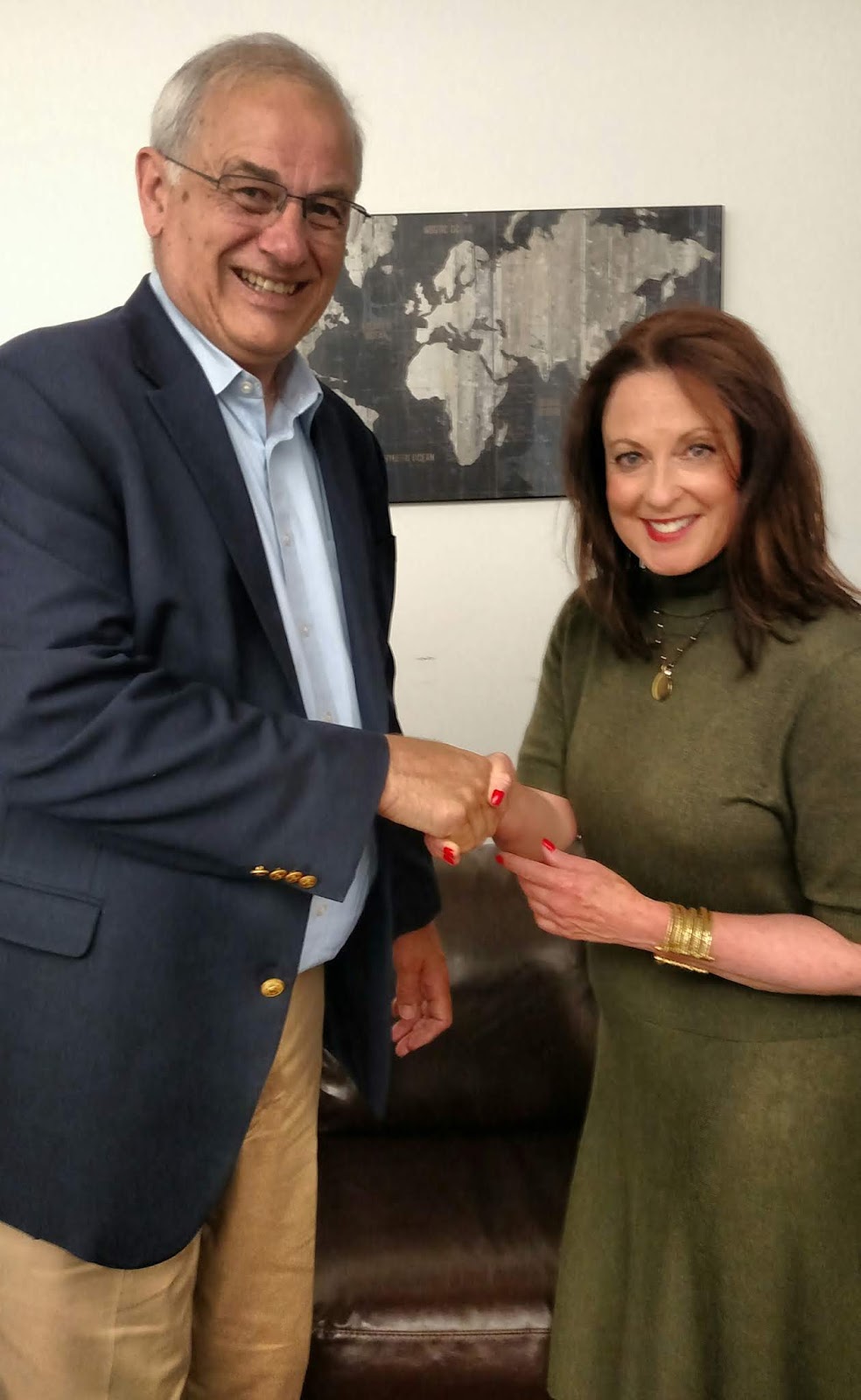


Ambassador Hof, an authority on Arab and Middle East affairs, and I continued to discuss trends that are defining a new Middle East.  The interview will be posting in the upcoming weeks. 


Lisa Bernard is the President of SecuritySpeak, LLC, a consulting firm and speakers bureau devoted to matters of national, cyber and international security.  Experts in these areas offer reports, briefings, talks and distinguished lectures to audiences of all types working to bring understanding of security matters to people in all walks of life.  To host a speaker or arrange for a consultation call (203) 293-4741 or email LisaBernard@SecuritySpeak.net.  See more of their work at  www.SecuritySpeak.net and at  www.Facebook.com/PodiumTime.   

Monday, June 11, 2018

The Trump-Kim Summit: Possibilities & Parameters Given the Personalities in Play


When word of a possible summit between U.S. President Donald Trump and North Korean Supreme Leader Kim Jong Un was announced, I took a momentary step back from the daunting issues associated with the North Korean nuclear build-up to look at the two individuals creating this historic event.  A few facts about them put them in an exclusive club.  Both men are sons of fathers who cast long shadows across the family enterprises.  Each man is married to a younger, empirically beautiful and stylish woman.  They each have young children.  Both live in palatial homes and enjoy the trappings of great wealth.  Both are viewed cautiously by the world at large and their bombast and inflammatory rhetoric have left many aghast and some even scared given the military arsenals they command.  Add to that the nearly forty-year age difference and it begs the question, "Is it possible that a 'paternal' or even 'grand-paternal' dynamic between the elder President Trump, age 71, and his junior partner Supreme Leader Kim, age 34, could frame or influence their interpersonal dynamic and help them move us out of the nuclear danger zone?" 

Of course it is possible that President Trump and Supreme Leader Kim will enter the same room and engage in that uniquely human activity of recognizing that the time has come to do what is both practical and radical and right all at the same time - that all the military preparation, economic imperatives, political dynamics - and the fatigue and fears factors that accompany them - will synthesize into a fresh and clear shared vision.  We can certainly hope so.  But personal chemistry is one of those non-quantifiable factors that can be assessed by historians and analysts only after the fact.  In the hours before these men meet, we must return to the realities that brought us to this point in the first place.  This reminds me of the question I posed in April to Gordon G. Chang, author of NUCLEAR SHOWDOWN: North Korea Takes on the World, as plans for a summit were being explored.  His response:

 
That said, he went on to share:


Time will tell, as the adage goes.  And so we wait - with all eyes on Singapore for history of some kind to be made.
 

Lisa Bernard is the President of SecuritySpeak, LLC, a consulting firm and speakers bureau devoted to matters of national, cyber and international security.  Experts in these areas offer reports, briefings, talks and distinguished lectures to audiences of all types working to bring understanding of security matters to people in all walks of life.  To host a speaker or arrange for a consultation call (203) 293-4741 or email LisaBernard@SecuritySpeak.net.  See more of their work at  www.SecuritySpeak.net and at  www.Facebook.com/PodiumTime.


Thursday, October 5, 2017

Ground Zero: North Korea as the First Rogue Member of the Nuclear Club - An Interview with Dr. Paul Bracken, Leading International Security Strategist


Amid natural disasters of unprecedented magnitude, a man-made nightmare lurks in the North Korean nuclear program.   Not given to drama, exaggeration or panic, it was my mission to reality-check my understanding of the threat Kim Jong Un’s arsenal and his intentions pose to the stability of the North Korean Peninsula, the vulnerability of our allies South Korea and Japan, and the security of the west coast of the United States.  To this end, I interviewed Dr. Paul Bracken, author of the The Dynamics of the Second Nuclear Age:  Strategy, Dangers and the New Power Politics and Fire in the East: The Rise of Asian Military Power and the Second Nuclear Age and The Command and Control of Nuclear Forces.   Paul Bracken’s assessments are distinctly comprehensive.  He holds a B.S. in Engineering from Columbia University and a Ph.D. in Operations Research from Yale University.   A Professor of Political Science and Operations Management, his grasp of the technology, history, players and politics – and the interplay of them all – is second to none.  War gaming under conditions of stress and uncertainty is what Paul Bracken does for private industry and the United States military.  What the games reveal about human nature, conflict escalation, and exogenous factors that alter strategic plans is surprising, sobering and instructive.  The following are excerpts from our talk.
BERNARD: Seismic tests support the North Korean claim that it tested a hydrogen bomb, however "sniffers" - the aircraft that fly through debris - have not detected radiation levels consistent with such a nuclear explosion.  How much of this claim is hype from North Korean State Media? 
 
BERNARD:  Earlier in 2017 you reasoned that Kim Jong Un would make the development of an H-bomb a top priority.  Suddenly, within just months, that goal may well have been realized.  What accounts for the lightening-pace of the North Korean nuclear program? 

 
BERNARD:  Of the nine states in the world that are nuclear-armed, North Korea is the one over which analysts and practitioners of foreign policy are losing sleep.  What is so troubling here?

BERNARD:  Citizens voice their worries about the rhetoric coming from President Trump towards Kim Jong Un during this crisis.  What do you make of the President's remarks? 
BERNARD:  We've seen the Trump administration's management of this challenge via the United Nations and the U.S. Congress with economic sanctions and through Secretary of State Tillerson's talks with Chinese and Japanese leaders.  What would American leadership look like for this crisis and on nuclear (non) proliferation in general?

BERNARD: Where is the United States in terms of modernizing our aging nuclear arsenals and committing to strategic thinking and planning for this second nuclear age?

 
BERNARD:  As we wrap up, it feels befitting to share an excerpt of an interview I read at the outset of my research.  Asked about your first reaction to the ongoing dispute with North Korea you replied:  "Stanley Kubrick (Dr. Strangelove) had no imagination.  Five years ago (2011, as Obama was going to eliminate nuclear weapons from the world), if anyone said a nuclear poker game would play out between 'The Donald' and Kim Jong-un, no one - no one - would have believed it.  Well, here we are ...."  Thank you for your generosity with your time, candor and expertise.  

Paul Bracken is available for formal presentations and distinguished lectures via Lisa Bernard's SecuritySpeak, LLC.  (203) 293-4741.  LisaBernard@SecuritySpeak.net.  Learn more about him at www.SecuritySpeak.net.  


Monday, November 21, 2016

2016 Election Night Calm ... Four Experts Kept Us Focused on Key Security Matters Facing the 45th American President

 
Four experts in different aspects of national and international security did not know, and could not know, who would be elected as the next American President as they spoke to an audience comprised of law enforcement, IT and HR professionals, business-owners and CEOs, U.S. Army veterans, educators, social workers and scholars, all assembled to hear macro-analyses of the dynamics and challenges presented by the global economy, Islamic State, nuclear proliferation and Russian foreign policy.  They convened in Westport, Connecticut, on Tuesday, November 8th for an Election Night 2016 Security Summit, 80 Minutes Around the World: Security Briefings for the 45th POTUS.   Focused on the issues and avoiding politics, each offered a ten-minute briefing to POTUS-Elect 45 and conducted a 5-minute Q&A.

Economist Constance Hunter was the first to the podium flagging trade policy, industrial policy and taxation as three key components of economic security.  Asia-watcher Gordon Chang then took the floor to map out the intricate relationship between China, Iran and North Korea in his talk called, The New Nuclear Nexus. 

Dr. Austin Long, an authority on insurgency and irregular warfare, rose to present The Islamic State in Iraq and Syria: Crucible for the Next American President. Dr. Stephen J. Blank capped off the program with an eye-opening and sobering synopsis of Russia’s War on America.  
During this program there was no election coverage and we operated under The Chatham House Rule.  Both worked to facilitate a candid and synergistic exchange of views and perspectives between the experts themselves and between the experts and the audience.  To organize a similar program, or for ideas on speakers and other formats more suitable for your department, meeting or campus, contact Lisa Bernard via email or telephone (203) 293-4741 or at www.Facebook.com/PodiumTime. #ElectionNightSecuritySummit    #ElectionNightSecurityBriefings  SecuritySpeak@PodiumTime


Friday, October 21, 2016

Just After Reports of Another North Korean Ballistic Missile Test ...

My followers began asking for clarity from an expert on the relationship between China and North Korea's nuclear program.  I asked Gordon Chang, author of Nuclear Showdown: North Korea Takes on the World, and internationally respected pundit on security matters in Asia, about this.


With his comprehensive approach and gracious style, Gordon Chang is renowned for his incisive analyses and commentary.  He lived and worked in Shanghai as Counsel to the American law firm Paul Weiss, and earlier in Hong Kong as Partner in the international law firm Baker & McKenzie.  He has briefed the United States CIA, Pentagon and State Department on security developments and he shared this assessment with me this week:

"North Korea has three launchers--theTaepodong-2, the KN-08, and KN-14--that can hit the lower 48 states.  The better view is that the North cannot mate a nuclear warhead to them, but that is only a matter of about three years.  The North Koreans have already put a nuke on top of their intermediate-range Nodong.

Beijing could rein in North Korea, but Chinese leaders do not want to do so because they view America as their main strategic rival.  They find Kim Jong Un's antics useful in keeping us and our allies off balance. 

We could force Beijing into being helpful--by, for example, imposing secondary sanctions on Chinese banks and enterprises--but so far there have been only tentative moves to do so.  The U.S. sanctions on Dandong Hongxiang industrial, imposed last month, show attitudes in the American capital are changing.  They are changing because an unstable Kim Jong Un in control of the world's most destructive weapons is presenting American policymakers with little choice."

N.B. Gordon Chang will be presenting The New Nuclear Politics: China, Iran and North Korea, at the Election Night 2016 Security Summit, 80 Minutes Around the World: Security Briefings for the Next American President, in Westport, CT, on November 8th.


Saturday, April 2, 2016

As Washington Hosts World Leaders at the Nuclear Security Summit ...


I asked Dr. Paul Bracken, author of the tour de force book, The Second Nuclear Age: Strategy, Danger and New Power Politics, for a comment. He replied:
 
 
The pace of military technology has reached a level not seen since the cold war in the 1950s.  Drones, cyber-war, targeted killings, anti-satellites weapons, hypersonic missiles are coming into the forces not just of the United States but of many countries.  Add to this atomic weapons, and soon, hydrogen bombs for India, Pakistan, Israel, and North Korea.  We are entering a new world of technology, yet the old political order of nation states remains essentially unchanged.  The 2016 Nuclear Security Summit shows the growing tension of a political order that is out of phase with technology advances.  Something has to give, and I don't think it's going to come from a slowdown in technology.
 
 
Scroll down for video of Dr. Bracken speaking to the North Korean missile program, STEM, emerging technologies and other key topics in security.

Sunday, February 14, 2016

Talking with Paul Bracken: Today's and Tomorrow's Technologies, Developments and Dangers in the Nuclear Arena

It was grey and cold outside when I arrived at Yale University to sit in on Dr. Paul Bracken’s class, Strategy, Technology & War, but illuminating and warm in his classroom.  There, eighty-five coeds and grad students from around the world (selected from hundreds who seek registration) engaged in a back and forth about strategy and the function of nuclear weapons from the Cold War into this “the second nuclear age.”  That is also the title of Dr. Bracken’s tour de force book, The Second Nuclear Age:  Strategy, Danger and the New Power Politics, a clarion-call for policymakers, technologists, investors and industrialists about this precarious era of nuclear proliferation.  It was just a few days after the North Korean missile launch when I arrived at the School of Management and I was percolating with questions for Dr. Bracken which he graciously addressed in our interview after class.  I am happy to bring the highlights to you in this space. 

Lisa Bernard:  Just this weekend, North Korea successfully launched a long range missile – a provocation deemed so serious that the United Nations Security Council convened an emergency session.   In what context can we understand this?
 
Lisa Bernard:  A recent article in the Wall Street Journal, The Other Dangers from That North Korean Nuke Test, by Messrs. Gilinsky and Sokolski, describes a frightening development, namely, the increasingly available advanced technologies and materials for hastened and state-of-the-art nuclear weapons development.  What does this mean, practically speaking, for the proliferation of WMD - weapons of mass destruction? 
 
Lisa Bernard:  We are coming upon the twentieth anniversary of STEM and the tenth anniversary of President George W. Bush’s American Competitiveness Initiative to bolster STEM.  With a B.S. in Engineering, a Ph.D. in Operations Research, as a Professor of Political Science and Business and a consultant to various branches of the U.S. government, you are uniquely positioned to view the impact of these efforts.  Professor Bracken, what do you see?


Lisa Bernard:  Paul, you speak and write so insightfully about the symbiotic relationship between Silicon Valley and the Pentagon.  Given the dynamics of national security today, what do you think might we see come out of Silicon Valley in the next chapter of their connection?
 
 
Lisa Bernard:  The gravity of these matters is sobering - even overwhelming. Thank you for helping me help my audience gain some perspective on the news we hear and the realities we face.  Your time and sharing of your expertise is very much appreciated. 


Would you like to host Paul Bracken and continue this conversation at your organization?  Call me at (203) 293-4741 or email LisaBernard@SecuritySpeak.net.  I’d be happy to help you through the particulars and arrangements.