Monday, June 25, 2018

Well Beyond the Red Line Crossed: Refugees, Reconstruction and Realpolitik in Syria Under Bashar al-Assad


This spring saw the beginning of the end of the Syrian Civil War that finds President Bashar al-Assad having prevailed both politically and militarily.  While the country remains a violent place, developments and numbers are noteworthy and critical in the consideration of U.S. security policy in its humanitarian, economic, military and diplomatic dimensions going forward in the region.  Among them, eleven million Syrians are displaced - both in and outside of their homeland whose infrastructure is demolished.  In control of more than sixty per cent of the country, President Assad has begun reconstruction and there are reports are that businesses are starting to open and contracts being negotiated by individuals, governments and companies.  Estimates of the cost of rebuilding Syria range from $200 billion to $1 trillion with most analysts and Bashar al-Assad himself agreeing on $400 billion price tag.  ISIS has been quashed.  Russian protection is cemented.  Iran has been told by Russia to withdraw its militias beginning with those near the border with Israel.

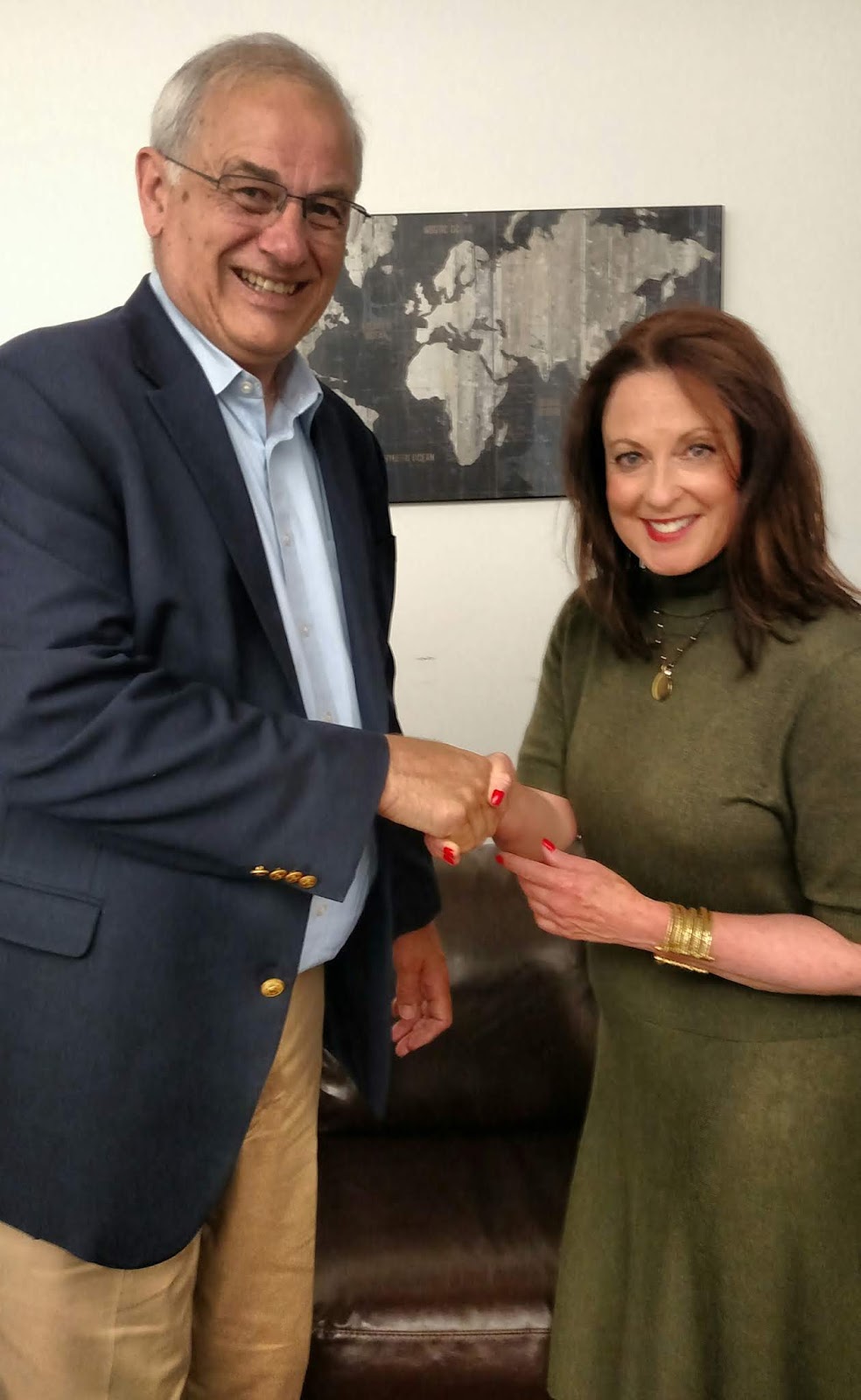
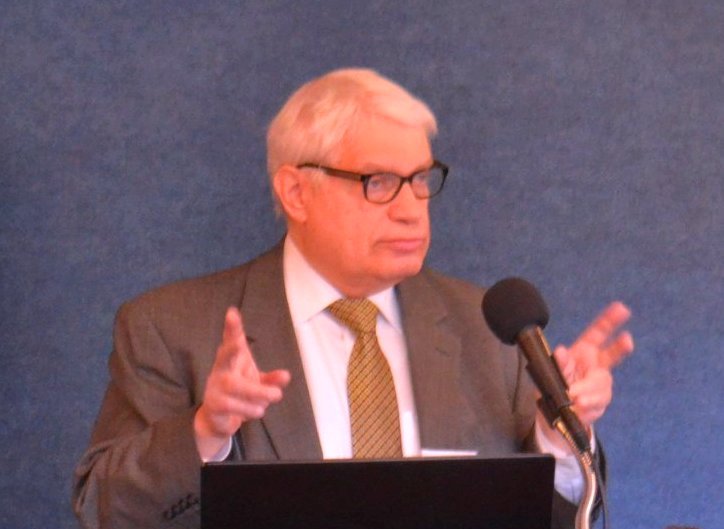
These circumstances prompted me to reach out to Ambassador Frederic C. Hof, appointed in 2012 as former Special Advisor for transition in Syria to Secretary of State Hilary Clinton after a year spent working to ease tensions between Syria and its neighbors in early 2011.  Ambassador Hof served in that position until September 2012 when he resigned in recognition that "the White House had little appetite for protecting [Syrian] civilians (beyond writing checks for refugee relief) and little interest in even devising a strategy to implement President Barak Obama's stated desire that Syrian President Bashar Assad step aside."  Ambassador Hof went outside the U.S. government and into the private sector as Senior Fellow at The Atlantic Council's Rafik Hariri Center for the Middle East, a program he would later direct for six years, in order to promote a more effective U.S. policy towards the Syria he described as "plunging into an uncharted abyss - a humanitarian abomination of the first order."  I met with Fred Hof in New York City on Tuesday, June 12th at the Bard College Globalization and International Affairs Program where he is teaching a seminar, Ten Principles for Effective Diplomacy.  With a view towards the stabilization of Syria and the strategic interests of the United States, I asked him what he thought the U.S. can and ought to be doing at this critical juncture.  His response:


My follow up question concerned the hurdles, obstacles and practical considerations of investing in the reconstruction of Syria and the possibility that China is in a better position than Russia, Lebanon, Jordan and other state contenders for long term investment.  Ambassador Hof replied:

 
Ambassador Fred Hof's professional life has focused largely on the Middle East with a long history of service and study in Jordan, Israel, Lebanon and Syria.  He is known internationally for his expertise in Arab affairs and for his integrity, bravery and intellectual honesty in diplomacy, negotiations and reporting.  I am grateful for his time and insights and shall be posting more of our interview, The New Middle East, in upcoming weeks.  
 
Lisa Bernard is the President of SecuritySpeak, LLC, a consulting firm and speakers bureau devoted to matters of national, cyber and international security.  Experts in these areas offer reports, briefings, talks and distinguished lectures to audiences of all types working to bring understanding of security matters to people in all walks of life.  To host Ambassador Hof for a speech, call (203) 293-4741 or email LisaBernard@SecuritySpeak.net.  See more of their work at  www.SecuritySpeak.net and at  www.Facebook.com/PodiumTime.   


Monday, June 18, 2018

A Continuing North Korea-Syria Connection? A Post-Summit Consideration

 
As U.S. President Donald Trump was wrapping up his historic summit with North Korea's Supreme Leader Kim Jong Un with denuclearization a key topic on their agenda, my thoughts were on another meeting to be hosted by Kim Jong Un - that with Syria's President Bashar al-Assad.  Though no date for the Pyongyang meeting has been decided, the timing of the announcement of this is intriguing, even suspicious.  North Korea and Syria share a decades-long history of military collaboration and technology transfers.  While North Korea has halted testing of nuclear weapons and missiles in advance of the Trump-Kim summit, the country continues to enrich uranium and remains a proliferator of weapons of mass destruction. 

On Tuesday afternoon, June 12, 2018, I was eager to interview The Honorable Frederic C. Hof, former United Stated Special Advisor on transition in Syria on a host of developments in the Middle East.  We met at Bard College's Globalization and International Affairs Program in New York City where Ambassador Hof is teaching a seminar, Ten Principles for Effective Diplomacy.  I immediately posited my concern that the denuclearization of the Korean Peninsula might bring with it the transfer of nuclear material and paraphernalia to a receptive Syria.  His response:


Ambassador Hof, an authority on Arab and Middle East affairs, and I continued to discuss trends that are defining a new Middle East.  The interview will be posting in the upcoming weeks. 


Lisa Bernard is the President of SecuritySpeak, LLC, a consulting firm and speakers bureau devoted to matters of national, cyber and international security.  Experts in these areas offer reports, briefings, talks and distinguished lectures to audiences of all types working to bring understanding of security matters to people in all walks of life.  To host a speaker or arrange for a consultation call (203) 293-4741 or email LisaBernard@SecuritySpeak.net.  See more of their work at  www.SecuritySpeak.net and at  www.Facebook.com/PodiumTime.   

Monday, June 11, 2018

The Trump-Kim Summit: Possibilities & Parameters Given the Personalities in Play


When word of a possible summit between U.S. President Donald Trump and North Korean Supreme Leader Kim Jong Un was announced, I took a momentary step back from the daunting issues associated with the North Korean nuclear build-up to look at the two individuals creating this historic event.  A few facts about them put them in an exclusive club.  Both men are sons of fathers who cast long shadows across the family enterprises.  Each man is married to a younger, empirically beautiful and stylish woman.  They each have young children.  Both live in palatial homes and enjoy the trappings of great wealth.  Both are viewed cautiously by the world at large and their bombast and inflammatory rhetoric have left many aghast and some even scared given the military arsenals they command.  Add to that the nearly forty-year age difference and it begs the question, "Is it possible that a 'paternal' or even 'grand-paternal' dynamic between the elder President Trump, age 71, and his junior partner Supreme Leader Kim, age 34, could frame or influence their interpersonal dynamic and help them move us out of the nuclear danger zone?" 

Of course it is possible that President Trump and Supreme Leader Kim will enter the same room and engage in that uniquely human activity of recognizing that the time has come to do what is both practical and radical and right all at the same time - that all the military preparation, economic imperatives, political dynamics - and the fatigue and fears factors that accompany them - will synthesize into a fresh and clear shared vision.  We can certainly hope so.  But personal chemistry is one of those non-quantifiable factors that can be assessed by historians and analysts only after the fact.  In the hours before these men meet, we must return to the realities that brought us to this point in the first place.  This reminds me of the question I posed in April to Gordon G. Chang, author of NUCLEAR SHOWDOWN: North Korea Takes on the World, as plans for a summit were being explored.  His response:

 
That said, he went on to share:


Time will tell, as the adage goes.  And so we wait - with all eyes on Singapore for history of some kind to be made.
 

Lisa Bernard is the President of SecuritySpeak, LLC, a consulting firm and speakers bureau devoted to matters of national, cyber and international security.  Experts in these areas offer reports, briefings, talks and distinguished lectures to audiences of all types working to bring understanding of security matters to people in all walks of life.  To host a speaker or arrange for a consultation call (203) 293-4741 or email LisaBernard@SecuritySpeak.net.  See more of their work at  www.SecuritySpeak.net and at  www.Facebook.com/PodiumTime.


Thursday, May 10, 2018

Understanding the Solid Relationship Between Israel and Russia

 
Photo Credit: The Times of Israel

This week marks the 73rd anniversary of the defeat of German Nazism and Israeli Prime Minister Benjamin Netanyahu was in Moscow with Russian President Vladimir Putin to mark the occasion.  Their diplomatic relationship - and the larger dynamic of Israel-Russia relations - are curious to so many Americans given the Russian patronage of Iran and the enmity between Israel and Iran.  For some perspective, I put the question to Dr. Stephen J. Blank, Senior Fellow at the American Foreign Policy Council in Washington D.C.  Dr. Blank is a historian of Russian foreign and military policies and his expertise spans the tsarist, Soviet and post-communist periods.  Ever generous with his time and expertise, he shared seven key reasons for what he called "the solidity of this relationship."

 
  • First, Putin personally appears to have good feelings about Israel and Jews and Russian policy formally eschews anti-Semitism - though there is still a fair amount of  it in society and he is willing to use it in measured doses for his domestic needs. 

  • Second,  Russian elite respect Israel's military-economic-technological prowess and know that Israel is a channel to Washington. 

  • Third, there are thriving trade and investment relations between the two countries - even to the point where Israel has sold weapons to Russia. 

  • Fourth, Israel respects Russian red lines and avoids actions that are provocative to her. If Israel has to cross a line it informs Moscow first.  This is something Putin et al. appreciate because it shows Israeli respect for Russian sensitivities and interests. 

  • Fifth, Moscow knows that wars against Israel end badly for Arabs and bring the U.S. back into the Middle East in a big way. 

  • Sixth,  there is some belief that the Russian Aliyah - the group of Russian Jews who have settled in and become citizens of Israel - is in some sense "our people" and they wish to preserve that tie.  They also understand what the USSR lost by pursuing anti-Semitic policies. 

  • Seventh, it is critical to Moscow's Middle East policies and its sense of those policies that it be able to talk candidly to all parties and not be excessively identified with any one state's interests.  This also includes Israel precisely because of the many unsettled security issues in the region."

In hearing Dr. Blank's incisive comments I am reminded of the salient and sage words of another distinguished alumnus of University of Pennsylvania, Charles Dudley Warner, who observed that "[p]olitics makes strange bedfellows." 

Lisa Bernard is the President of SecuritySpeak, LLC, a consulting firm devoted to matters of international security.  Experts like Dr. Stephen J. Blank offer briefings, talks and distinguished lectures to audiences of all types working to bring analyses and understanding of security matters to people in all walks of life.  To secure a speaker for your program reach out to  (203) 293-4741 or LisaBernard@SecuritySpeak.net.   Learn more at  www.SecuritySpeak.net. 


Wednesday, May 9, 2018

Might "China Fatigue" Be a Factor for Kim Jong Un as the Supreme Leader Prepares to Meet President Trump in a Historic Summit?

Photo Credit: Daily Star

Twice in as many months we've learned of secret and surprise meetings between North Korea's Supreme Leader Kim Jong Un and China's President Xi Jinping, the more recent of which is taking place at the time of this writing and on the very day that U.S. President Donald Trump announced that a date and a venue have been decided for this historic Trump-Kim Summit.  This reminds me of the question I posed last month to Gordon G. Chang, author of NUCLEAR SHOWDOWN: North Korea Takes on the World, as plans for a summit were being explored.  I wanted to know if Kim Jong Un is aware of America's unique history and knack for turning enemies into prosperous and protected allies - Japan as the most obvious in North Korea's purview.  And, if so, how this might factor in to Kim Jong Un's thinking now that the major power heads of state are American President Trump for no more than two or six years, Russian President Putin for the foreseeable future and Chinese President Xi Jinping for life.  Could the narrow window of opportunity to "make a deal" with POTUS 45 be compelling to Kim?  His response:


Lisa Bernard is the President of SecuritySpeak, LLC, a consulting firm and speakers bureau devoted to matters of national, cyber and international security.  Experts in these areas offer reports, briefings, talks and distinguished lectures to audiences of all types working to bring understanding of security matters to people in all walks of life.  To host a speaker or arrange for a consultation call (203) 293-4741 or email LisaBernard@SecuritySpeak.net.  See more of their work at  www.SecuritySpeak.net and at  www.Facebook.com/PodiumTime.     


Thursday, April 19, 2018

Regional Security Concerns and North Korea's Short and Intermediate-range Systems Weigh-in Heavily as President Trump Prepares for Historic Summit


Clear from President Trump's press conference yesterday is that his approach to his summit with North Korean Supreme Leader Kim Jong Un is holistic and sensitive to the distinct concerns of American allies on and beyond the theater of the Korean Peninsula.  While the United States is vulnerable to North Korea's intercontinental ballistic missiles, allies like South Korea and Japan are vulnerable to the regime's increasingly mobile and precise short and intermediate-range rockets.  A curious addition to the North Korean arsenal was spotted on February 8th of this year at the Pre-Olympics Military Parade in Pyongyang.  Carried on hinged Transporter-Erector-Launchers (TELs - pictured below) was what appeared to be a variant of the Russian Iskander missile, perhaps now solid-fuelled for a faster, longer range and more agile version.  Any enhanced "shoot and scoot" capability for the North Koreans is particularly troubling to South Korea and worrisome for Japan.

Photo Credit: The Diplomat

It's been more than two months since the photo-op for for this new missile - dubbed the "Juche-Iskander" for it's distinctly North Korean innovations or renovations of the Russian prototype.  But we still don't know if this rocket is short or intermediate-range as it has not been flight-tested.  I wondered if this was part of Kim Jong Un's conciliatory pause in missile testing in advance of the Trump-Kim Summit or if there was something else in play.  I asked as much of Gordon G. Chang, author of Nuclear Showdown: North Korea Takes on the World, in my interview with him on April 14, 2018.  He replied:


I then pressed him to address the concerns in the context of the Trump-Kim Summit about this smaller and possibly non-nuclear missile that has military strategists concerned - beyond the worry of the damage it could do when priced-right and sold by North Korea in the global marketplace.  He responded:


More from my interview with Gordon Chang will be posted in advance of the Trump-Kim Summit.  In the interim, I urge you to follow him @GordonGChang and read his articles at www.TheDailyBeast.com.  See him live if you can or hear him on radio on The John Batchelor Show on 770 AM in the greater New York City area.  His talks, commentary and analyses are timely and cutting edge.
 
 Photo Credit: Lydia Chang
 
Lisa Bernard is the President of SecuritySpeak, LLC, a consulting firm and speakers bureau devoted to matters of national, cyber and international security.  Experts in these areas offer reports, briefings, talks and distinguished lectures to audiences of all types working to bring understanding of security matters to people in all walks of life.  To host a speaker or arrange for a consultation call (203) 293-4741 or email LisaBernard@SecuritySpeak.net.  See more of their work at  www.SecuritySpeak.net and at  www.Facebook.com/PodiumTime.   


Saturday, April 14, 2018

Chemical Weapons in Syria: The North Korean Connection


This morning I was on my way to interview Gordon G. Chang on the upcoming Trump-Kim Summit when I heard the Pentagon briefing and commentaries on the strikes on Syrian chemical weapons arsenals.  Chief Spokeswoman Dana White emphasized that this operation was different from the 2017 strike on Syria's Shayrat Air Base in that it targeted Bashar al-Assad's production capability rather than his delivery vehicles.  General McKenzie detailed the contributions of British and French forces and noted that Russian air defenses were not deployed.  The European Union called on Russia and Iran to help stop future chemical weapons attacks by the Syrian government.  What I did not hear or read in any of the reports or analyses is the role of North Korea in the Syrian chemical weapons program.  Gordon Chang is the author of Nuclear Showdown: North Korea Takes on the World and a leading authority on North Korean, Chinese and regional military and security affairs.  On the eve of the 2016 Presidential election I heard him deliver a briefing entitled, The New Nuclear Nexus: China, Iran and North Korea. In it, he revealed the eye-opening extent of North Korea's strategic relationships with other autocratic regimes.  I jumped at the chance to ask him about the relationship between North Korea and Syria with respect to chemical weapons.  His response:


My full interview with Gordon Chang will be posted in advance of the Trump-Kim Summit.  In the interim, I urge you to follow him @GordonGChang and read his articles at www.TheDailyBeast.com.  See him live if you can or hear him on radio on The John Batchelor Show on 770 AM in the NY area.  His talks, commentary and analyses are always timely and cutting edge. 
 
 
Lisa Bernard is the President of SecuritySpeak, LLC, a consulting firm and speakers bureau devoted to matters of national, cyber and international security.  Experts in these areas offer reports, briefings, talks and distinguished lectures to audiences of all types working to bring understanding of security matters to people in all walks of life.  To host a speaker or arrange for a consultation call (203) 293-4741 or email LisaBernard@SecuritySpeak.net.  See more of their work at  www.SecuritySpeak.net and at  www.Facebook.com/PodiumTimeVery special thanks go to Lydia and Gordon Chang for their ever-gracious efforts to keep the level of discourse on these critical issues at a high and dignified plane and to the Charles Dillon Public Library for providing the venue for Lisa Bernard's interview of Gordon Chang.