Tuesday, March 14, 2017

9-1-1. What is Your Emergency ... Action Plan? Business Continuity Plan? Disaster Recovery Plan? An Interview with Bo Mitchell, President of 911 Consulting, Former Police Commissioner, Wilton, CT


Be it a flood, fire or medical emergency, active shooter or terrorist, when lives are at stake, stress levels rise and fear moves in.  We fear injury, loss of life, loss of livelihood, loss of our sense of security.  One man has made it his life’s mission to offer real and practical alternatives to panic and the potential for pandemonium and irrecoverable loss when disasters strike.  Bo Mitchell, President of 911 Consulting and former Police Commissioner of Wilton, Connecticut, offers CEOs, business-owners, managing partners, university presidents, and other heads of enterprises, the opportunity to minimize the risks associated with emergencies, manage them when they occur, communicate efficiently with those who need information and instruction, and bring things back to normal. 
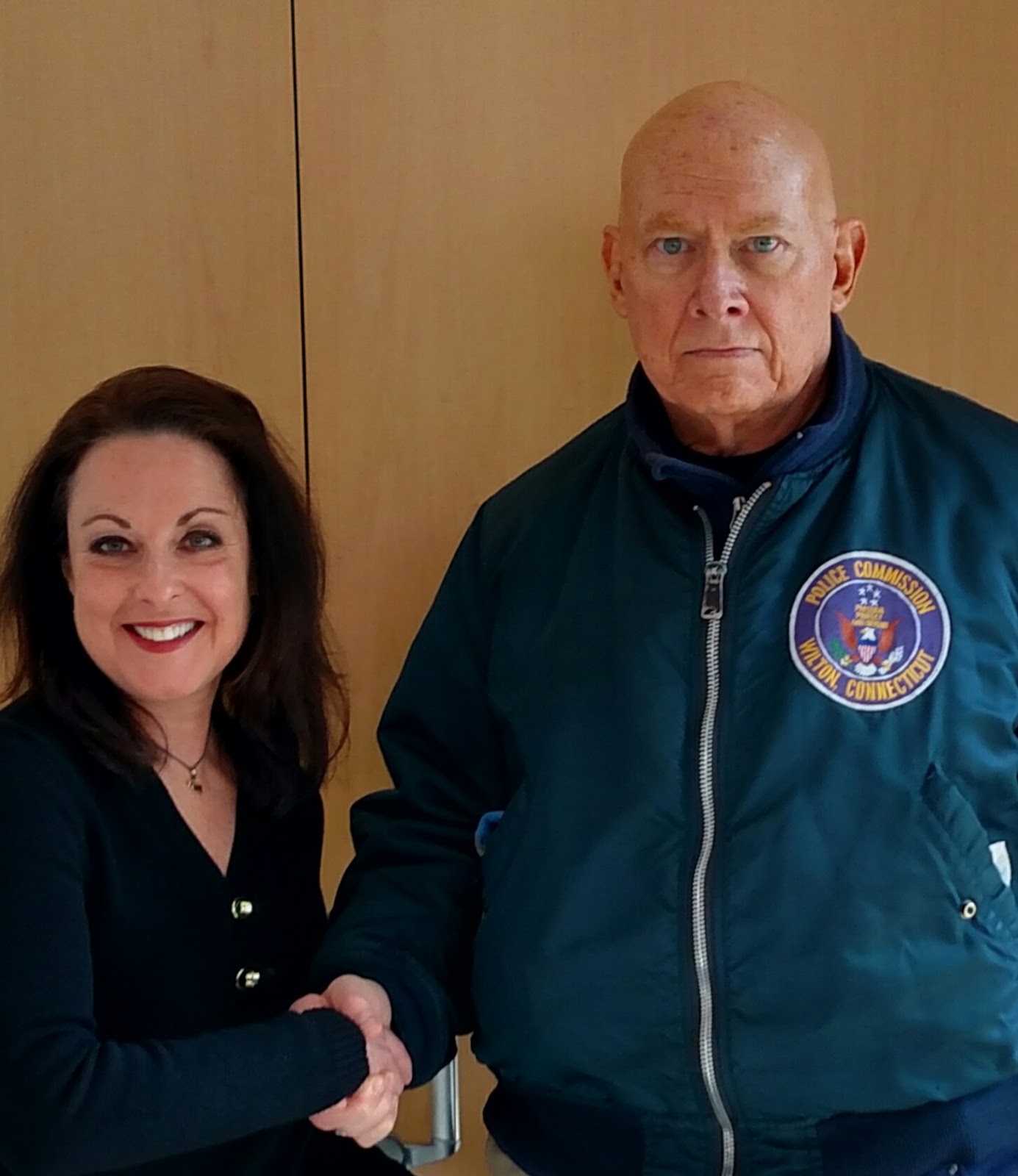
 
  
“Amateurs talk strategy.  Professionals talk logistics.”  That distinction by General Omar N. Bradley echoed in my head as I listened to Bo Mitchell, arguably our nation’s leading private-sector emergency management professional.  In fact, from the cauldron of scary scenarios on the agenda when you speak with him, emerges a calm and reassuring sense of security as his expertise and devotion are revealed.  With twenty-one earned certifications in organizational safety and security, and an encyclopedic knowledge of safety laws, security protocols and emergency procedures, he addressed my followers’ concerns concisely and practically.  I was heartened by his refreshingly apolitical and holistic approach to crisis management.  His no-nonsense style and genial manner put a confident and human face on an otherwise unsettling subject.  I can see why he is called upon as an expert witness in landmark court cases.  It is not simply the depth and breadth of his thirty-plus years of experience in law enforcement, security management and emergency preparedness that makes Bo Mitchell an approachable and reliable leader in this industry.  It is his deep respect for human life and the organizations and reputations we build, his intellectual honesty and his deep regard for details.  He is a realist and a human being.  I hope these excerpts capture all that and offer you an entrĂ©e to what needs to be done for your employees, colleagues, customers and stakeholders.

BERNARD:  Since your retirement in 2001 as Commissioner of the Wilton Police Department, how has the nature or landscape of emergencies changed? 


BERNARD:  My blog followers are all
around the world, but the majority of them are in and around the tri-state area in the U.S.  What keeps you up at night with regard to emergencies and disasters in our area?  
 

BERNARD:  Reviewing the literature, my impression is that conceptually, Emergency Action Plans, Emergency Management, Business Continuity Plans and Disaster Recovery Plans are o
verwhelming to think about.  But practically, approaching these plans is actually quite linear, logical and feasible.  Is that a fair assessment?  

BERNARD:  With less than ten per cent of companies in the U.S. having a designated Security Officer, who are the candidates for spearheading Emergency Action Plans and the like?
 
 
BERNARD:  Experts are in agreement that when a crisis occurs, communications must be centralized with one uniform message and one consistent “voice.”  With the proliferation of mobile devices and social media platforms, how can an outfit work to keep individuals in a crisis situation  from reporting updates themselves?
 
BERNARD:  What kind of employee makes a good candidate for spokesperson during a crisis?

 
BERNARD:  Regarding Business Continuity Plans, one thing my followers uniformly express is that they know they need a plan.  What can you share today that will give them the first step or two  towards initiating one?


BERNARD: In a presentation to JP Morgan Chase, you mentioned the substantial costs of litigation and the hefty fees companies pay out when disaster strikes and people are injured or die.  How does having OSHA and other compliant plans offset costs?  Is it because plans and training save lives and there are fewer lawsuits or grounds for litigation?
 
 
BERNARD: Bo Mitchell, I thank you for your service and for educating my clients and followers at Security Briefs on these critical safety and security matters.
 

Thursday, January 26, 2017

Passcode: An Excellent Service from The Christian Science Monitor

Need an accessible, timely and reliable guide to security and privacy matters? Subscribe for free to The Christian Science Monitor's Passcode and receive it in your inbox three times a week. http://www.csmonitor.com/World/Passcode. It's a user-friendly service featuring excellent journalists in the field who probe at the practical and big-picture levels. You'll feel like their reading your mind as they offer incisive pieces on exactly what concerns you about staying safe and protecting your privacy in the digital age.
 

Thursday, January 12, 2017

A Sold-out and Successful CyberSalon ... For Ladies Only!


We couldn't have asked for a better start to 2017 at Lisa Bernard's SecuritySpeak!  At our first Dr. Robert L. Bernard Memorial Lecture, women from IT, financial services, and industry gathered to get their cyber-safety on - and they did!  With formal remarks followed by a workshop led by Ami Soifer, we dug into the science and systems behind hacking and then moved immediately to enhance our cyber-security as a practical matter.  Ami is the CEO of The TNS Group, a managed IT consulting firm based in Connecticut and serving firms in the Global 2000.  He is a world-class engineer of IT designs and considered by many to be one of the world's foremost secure application delivery experts.  Warm and personable, Ami engaged the group in his inimitable style from the get-go and then proceeded to bring the complexities of cyber-matters to practical levels.  We left the CyberSalon both feeling more secure as well as being more secure with regard to our online lives, devices and our and our clients' data.  Let this program be the first of many as Ami is prepared to bring his expertise to others in this forum.  At SecuritySpeak, we say that we "bring a human face to security matters."  Ami's CyberSalon... For Ladies Only has become the model for this mission. 


Wednesday, January 4, 2017

A CyberSalon - For Ladies Only, Wednesday, 11 January 2017, 3:00 - 5:00 p.m.

Ladies, its 2017 and time to get your cyber-safety on!  Join us for a CyberSalon with Ami Soifer, world-class engineer of IT designs and the CEO who bridges the cyber-security and hardware worlds.  This is a relaxed, “whine” and cheese, end-of-the-day event to provide a safe space for the questions you know you need to ask about passwords, servers and settings(oh my!) , but haven’t made the time to … until now:  
Wednesday, January 11, 2017
55 Greens Farms Road, Westport, CT  06880
5-minutes from Westport’s Saugatuck Metro North Station (shuttle-service available) and 5-minutes off I-95 Exit 17 or 18 with free parking on-site
3:15 p.m.  Charge-up your devices and wind-down with wine and cheese
3:30 p.m.  Insights, Guidance and Remarks by Ami Soifer
4:00 p.m. – 5:00 p.m.  Q&A and workshop-style exchange
$36 a lady.  Completed registration required by Monday, 1/9/17, as seating is limited.
Hit reply or email LisaBernard@SecuritySpeak.net to start your registration.  We need to know what’s on your mind and about your mobile phones, tablets and other devices.
Sign-up with a colleague, mom, sister, daughter or pal!  And remember:  Share - or be square!
#CyberSalonCT        #ForLadiesOnlyCT

Friday, December 23, 2016

Zalmay Khalilzad's THE ENVOY Earns its Place on the Permanent Bookshelf


ISBN 978-1-250-08300-5 from St. Martin’s Press, New York, New York, 2016, $27.99.  Available on Amazon, $17.99. 
 
It’s going to be a long winter so before the January blues set in, go get your copy of THE ENVOY: From Kabul to the White House, My Journey through a Turbulent World.  It’s Zalmay Khalilzad’s memoir, rich in more than mere reflections on his tenures as U.S. Ambassador to Afghanistan, Iraq and the U.N.  Though it would have been enough to put in perspective and give us a bird’s eye view on twenty-plus years of seismic events, American foreign policy, and the makeover of the greater Middle East, this book encompasses so much more.  It is a poignant and often refreshing view of America through the eyes of a young visitor from an ancient and mysterious land.  Of his time as a student in California at age 15 on an AFS exchange trip in 1966, he recounts,
I was deeply impressed by the American talent for organization.  Coming from the more anarchic environment of Afghanistan, I had the impression that in America everything functioned as if it were being carried out by a military organization.  During field trips, the bus rolled up on time, and the kids were ready to go.  The people at our destination were prepared and expecting us.   Arrangements for lunch and drinks had been made and went off without a hitch.  Guides completed their tours with precision.  The bus got us all back to school just as our families were arriving to pick us up.  It was a marvel to watch.
Not only do we get a glimpse of America through his wonder-filled eyes, but we get an in-depth and unorthodox view of his homeland as well. The book is a window to an Afghanistan rich in meaningful family and religious traditions.  It describes a cuisine that features the bounty of the earth and a culture that treasures its children and offers a childhood of splendors - kite flying, sleeping under the stars in summer, and horseback riding to school.  It is a peek at a once-empire most Americans couldn’t find on a map before 1979 when the Soviet invasion made it a marker in the Cold War.  It is a glance at a once treasured land before it became synonymous with names and events that rankle: the Taliban, invasion, occupation, al Qaeda.   After one reads THE ENVOY, Afghanistan won’t simply be the place where Osama Bin Laden plotted the 9/11 attack.

Professor Khalilzad escorts us to these equally distinct Afghanistans in a memoir that layers the tender observations of a sensitive and perceptive boy, the sophisticated and evolving values of a young man processing his life from outside Afghanistan, and the conundrums facing the scholar/policy analyst turned presidential envoy who returns home on his assignments - home being both Afghanistan and his beloved America.   Never neglected in his recollections are his adored family – from his parents and siblings to his wife and sons – or his thoughts on cultural sexism and feminism, people’s decisions in the context of their circumstances, and the tricky co-existence of both antiquity and modernity on this one earth.  This the connective tissue in Zalmay Khalilzad’s memoir and what keeps it real.  This is what makes it a great read not just for the followers of foreign affairs but in general. 
For those who do contemplate national and international security matters, and especially the crafting, instruments and implementation of U.S. foreign policy, THE ENVOY is a telling and textured narrative.   Presented in the first person, it is a rare ticket to front row seats in the theatres of American universities, think-tanks, the White House, compounds and embassies in Afghanistan and Iraq and the United Nations.  It weaves seamlessly in and out of national, tribal, regional and world events on emotional, intuitive, intellectual and professional levels, making the read as easy as it is riveting.  Set up in time periods that read chronologically, this memoir facilitates reading in spurts and allows for the digestion of tremendous detail.  It's an up-close and personal look at the disparate players, complex politics and the unprecedented circumstances that produced U.S. policies, missions, and outcomes in the greater Middle East from Presidents Ronald Wilson Reagan through George W. Bush. 
I refer to Zal Khalilzad as “Professor” because he was mine at Columbia University’s School of International and Public Affairs.  At that time, I was one of the very few women in the International Security Policy Studies program, and we felt our minority status – but not in Zal’s course.  There was something unique in his approach to people that was organically egalitarian.  He held a respect for humanity that didn’t carry a banner (which is not unusual to do at my alma mater) but nonetheless modeled it as constantly and naturally as he breathed.  Not until this book did I understand the roots of this.  After reading THE ENVOY, I see his facility for respecting individuals in their own dynamic as his gift.  It explains why he views himself as an optimist while his work echoes the voice of realism.  They are resolved in that he sees clearly the core dynamic of a person or group and then works with great faith to bring them and theirs to their full situational best.  Time and again, he shares his sentiments, humbly and candidly, on these often gear-grinding and Sisyphean-like missions.  About returning to Kabul, he writes,
In the absence of Afghan or international forces in the countryside, warlords were establishing, or reestablishing, their fiefdoms.  Before I was on the ground in Afghanistan, I had sympathized with the idea of maintaining a light footprint, largely because of Afghans' historic xenophobia.  But when I spoke with ordinary Afghans in Mazar and Herat during an early trip in 2002, I began to see how mistaken I was.  People confided that when they saw members of the local militia coming toward them on the street, they tensed up, expecting to be harassed, robbed, or beaten for no reason.  By contrast, when they saw a soldier from a foreign country, they relaxed.  The difficulty was that the United States was working with the warlords.  The warlords had carried the burden of the ground campaign against the Taliban and al Qaeda and, in the absence of anything like an effective national army, were still needed to take on the insurgents.
Descriptions like “highest-ranking Muslim to ever serve in a U.S. administration” do not do justice to the depth or distinction of the special envoy the United States and our associates in the greater Middle East enjoyed in Zalmay Khalilzad.  His life’s journey and service, as revealed in this book, are indelible reminders that no one-line label can come close to capturing the sensibilities, character, values and vision that define an individual.  Nor can it suggest the breadth of the contribution they make.  Indeed, Professor Khalilzad continues to contribute, bringing perspective from his experience to bear on today’s challenges in the region and beyond.  On Page 283, he shares five lessons learned from the American experience in Iraq, and they seem as on point for the incoming 45th American President as for the exiting one.  Number five is one I have heard consistently across my interviews with security experts of all stripes and warrants repeating: “Exercise presidential command.”  Chapter Twenty-Six, A More Dangerous World 2016 and Beyond, is a security manifesto for the United States.  Professor Khalilzad presents a survey of the challenges, threats, and opportunities, as well as the tools, talents, and Achilles’ heel of America as a world power facing powerful shifts in the global arena.   As such, this pearl from 2016 is a timely read and belongs on the bookshelf for the New Year and beyond as well. 


Sunday, December 4, 2016

The Phone Call Heard 'Round the World: What of the Talk between Presidents Trump and Tsai?

I admit, my first reaction to the news of a break in forty years of American policy was as much to the time span of forty years as to the event itself.  Could this be the beginning of a shift of Biblical proportions?  Hmmm ... I next analogized the happening to a superpower chess match.  While our eyes have been on North Korea as a pawn of China and Russia, could the United States have just moved it's Queen on China's Bishop?  Enough.  It was time to call an expert, so I reached out to Gordon G. Chang, author of The Coming Collapse of China and devoted analyst of Asian security matters.  He has been generous and pivotal in this space and, most recently, speaking to a live audience at our Election Night 2016 Security Summit.  He replied with his characteristic precision and alacrity:
 
"It is possible the phone conversation Friday with Tsai Ing-wen was Trump's opening bid in a complex bargaining with Beijing and that he has no long-term intention to strengthen relations with Taipei, but the Trump advisor who put the call together, Stephen Yates, is a strong proponent of Taiwan.  It is almost certain, therefore, that Yates was trying to steer American policy in Taipei's direction.
What we do know is that the President-elect has broken with almost four decades of Washington policy toward China, and this creates a dynamic that could take on a life of it's own.


Monday, November 21, 2016

2016 Election Night Calm ... Four Experts Kept Us Focused on Key Security Matters Facing the 45th American President

 
Four experts in different aspects of national and international security did not know, and could not know, who would be elected as the next American President as they spoke to an audience comprised of law enforcement, IT and HR professionals, business-owners and CEOs, U.S. Army veterans, educators, social workers and scholars, all assembled to hear macro-analyses of the dynamics and challenges presented by the global economy, Islamic State, nuclear proliferation and Russian foreign policy.  They convened in Westport, Connecticut, on Tuesday, November 8th for an Election Night 2016 Security Summit, 80 Minutes Around the World: Security Briefings for the 45th POTUS.   Focused on the issues and avoiding politics, each offered a ten-minute briefing to POTUS-Elect 45 and conducted a 5-minute Q&A.

Economist Constance Hunter was the first to the podium flagging trade policy, industrial policy and taxation as three key components of economic security.  Asia-watcher Gordon Chang then took the floor to map out the intricate relationship between China, Iran and North Korea in his talk called, The New Nuclear Nexus. 

Dr. Austin Long, an authority on insurgency and irregular warfare, rose to present The Islamic State in Iraq and Syria: Crucible for the Next American President. Dr. Stephen J. Blank capped off the program with an eye-opening and sobering synopsis of Russia’s War on America 
During this program there was no election coverage and we operated under The Chatham House Rule.  Both worked to facilitate a candid and synergistic exchange of views and perspectives between the experts themselves and between the experts and the audience.  To organize a similar program, or for ideas on speakers and other formats more suitable for your department, meeting or campus, contact Lisa Bernard via email or telephone (203) 293-4741 or at www.Facebook.com/PodiumTime. #ElectionNightSecuritySummit    #ElectionNightSecurityBriefings  SecuritySpeak@PodiumTime